




Setting up multiple companies to separate business interests can seem very straight forward. There are however important considerations. We explore the implications of owning too many companies.
Making Tax Digital 2026: 5 Steps to Prepare for MTD for Income Tax
26 March 2026
Accounting & Compliance, Cloud Accounting, Reducing Tax
HM Revenue & Customs is continuing the rollout of Making Tax Digital (MTD), with the next major phase applying to Income Tax Self-Assessment.
From 6 April 2026, many self-employed individuals and landlords will be required to keep digital records and submit quarterly updates to HMRC using compatible software.
The new system represents a major shift away from the traditional annual Self-Assessment tax return.
Preparing early can help you stay compliant and avoid unnecessary disruption when the rules come into effect.
Here are five key steps to help you get ready for Making Tax Digital for Income Tax.
Check if Making Tax Digital will apply to you
MTD for Income Tax will be introduced gradually based on gross income (before expenses) from self-employment and property.
The rollout timetable currently looks like this:
From April 2026
- Self-employed individuals and landlords with combined income over £50,000
- Based on income reported in the 2024/25 tax return
From April 2027
- Threshold reduces to over £30,000
- Based on 2025/26 tax returns
From April 2028
- Threshold reduces to over £20,000
- Based on 2026/27 tax returns
If you earn both self-employment income and rental income, HMRC will consider the combined total when determining whether you fall within MTD.
Currently, partnerships are not included, although they may be brought into the regime at a later stage.
Start keeping digital records
A key requirement under Making Tax Digital is maintaining digital records of income and expenses.
If you currently keep manual records or rely heavily on spreadsheets, now is a good time to review whether your systems are MTD compliant.
Using cloud accounting software or digital bookkeeping tools can help you:
- Track income and expenses in real time
- Reduce errors and missing information
- Submit updates directly to HMRC
Moving to digital record keeping sooner rather than later will make the transition far smoother.
Understand the new quarterly reporting requirements
Under MTD for Income Tax, instead of submitting one tax return each year, individuals will provide quarterly updates to HMRC.
The standard reporting deadlines are:
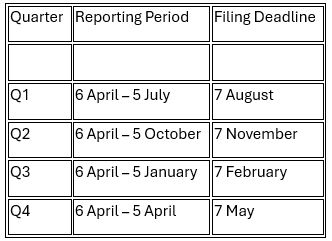
Some accounting software also allows a calendar quarter option, which aligns updates with standard month-end reporting.
After the end of the tax year, a Final Declaration must also be submitted.
This replaces the traditional Self-Assessment tax return.
Consider how multiple income sources are reported
If you run more than one business, separate quarterly updates must be submitted for each trade.
However, property income is reported differently:
- A single combined update is submitted for all rental properties
- If property is jointly owned, you only report your share of the income
The Final Declaration at year end will combine all income sources, reliefs and allowances to determine the final tax liability.
Importantly, tax payment deadlines are not changing.
Tax will still generally be payable by 31 January following the end of the tax year, and the payments on account system will remain in place.
Check whether you qualify for an exemption
Depending on your circumstances, you may be able to apply for an exemption.
Some are applied automatically by HM Revenue & Customs, while others require an application.
Broadly, you may be exempt if:
- Your income is below the threshold
- You are unable to use digital systems (for example, due to digital exclusion)
- Your circumstances fall into specific categories (such as trustees or personal representatives)
Some exemptions are permanent, while others are temporary and may bring you into MTD at a later date.
What Does This Mean?
If you’re exempt, you won’t need to follow MTD requirements but you’ll still need to submit a Self Assessment tax return and report your income as usual.
A Quick Note on Applications
Not all exemptions are automatic. In some cases, you’ll need to apply and provide evidence.
For example, HM Revenue & Customs will assess claims of digital exclusion based on your personal circumstances and factors like cost or unfamiliarity with software are not usually accepted on their own.
Exemption rules depend on your situation check if you are exempt from making tax digital on the Gov website.
Be aware of the new MTD penalty system
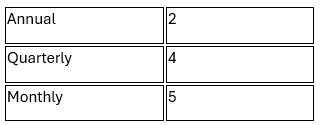
Making Tax Digital introduces a points-based penalty system for late submissions.
- Each missed deadline results in one penalty point
- Points accumulate separately for each reporting obligation
- Once a threshold is reached, a £200 penalty is issued
Maintaining accurate digital records and submitting updates on time will therefore be essential.
Start preparing for Making Tax Digital 2026 now
Although Making Tax Digital for Income Tax starts in April 2026, taking action now can make the transition much easier.
You may wish to start by:
- Reviewing whether your income exceeds the MTD thresholds
- Moving to MTD-compatible accounting software
- Establishing processes to keep records up to date throughout the year
Preparing early will help ensure you remain compliant and avoid penalties once the new reporting requirements take effect.
Need help getting ready for Making Tax Digital?
If you are self-employed or a landlord, professional advice can help you understand how the new rules will affect you and ensure you are fully prepared.
Call 01634 731390 to speak to one of our specialists and find out how we can help you get ready for Making Tax Digital for Income Tax.
Our services
If you would like to find out more about some of our services that might help you please take a look at our related pages:
Cloud Accounting & Business Software Solutions
Blogs related to MTD
Take a look at our other blogs on the topic of MTD
What software should I use for MTD?
Staying on Top of Your Numbers: 6 Key Bookkeeping Steps for Success
The content in this blog is correct as at 16th March 2026. See terms and conditions.

